Listen on:


Episodes
Sunday Jan 19, 2025
Sunday Jan 19, 2025
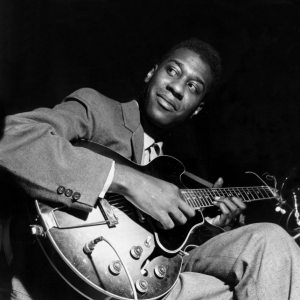
Grant Green was one of the all time greats of jazz guitar. His flame burned brightly for a time, but he is to a certain degree a “forgotten” star.
Green’s approach to the guitar was like that of a horn player. He played single note lines that were melodic and improvisational. His playing was free flowing and swung with a soulful spirit and deep grooves. He presented a crisp, uncluttered sound with impeccable phrasing. To top it off, there was a searing intensity to his art.
Grant Green was born in St. Louis in 1931 (although many sources say 1935) and came of age playing in jazz and R & B groups, with local players such as Sam Lazar, and Jimmy Forrest, with whom he made his first record, in 1959. He came to the attention of Lou Donaldson, and when Green was encouraged to move to New York, Lou introduced him to Blue Note Records.
Grant recorded prolifically for Blue Note. From 1960-1965, Green made over twenty sessions as a leader, but many were not issued during his lifetime. Recordings that are now considered masterpieces were “left in the can” and only posthumously released.
These albums included swinging sides with pianists such as Sonny Clark and McCoy Tyner, organ groups with progressive Larry Young and other B-3 players, and classic records such as “Idle Moments” with Joe Henderson, and “Grantstand” with Yusef Lateef. Green also made numerous memorable appearances as a “house guitarist sideman” on discs of all the Blue Note greats.
After an absence from the scene in the late 1960's to recuperate from health issues, Green moved to Detroit and from that base re-emerged in 1969 in the funk rock soul-jazz genre, mastering that groove, and for several years he was a sensation in that zeitgeist. However, later in the 1970's he had medical ailments and hospitalizations, and died young in 1979.
originally broadcast January 5, 2025
Saturday Jan 11, 2025
Saturday Jan 11, 2025
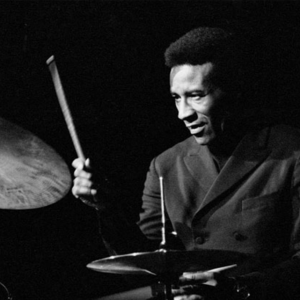
WKCR presents a marathon broadcast celebrating Max Roach annually, on his birthday anniversary, January 10.
For my segment on the 2025 edition, I prepared a set focusing on Max Roach’s contributions to great piano trio recordings. It includes sessions with Bud Powell, George Wallington, Thelonious Monk, Herbie Nichols, John Dennis, Sonny Clark, Duke Ellington, and the legendary Hasaan.
This episode begins with an appetizer of tracks from Brown-Roach and Max’s Quartet with Hank Mobley, then serves the main course of 2 ½ hours of the piano trio sides, and concludes with a dessert cordial of Allan Eager.
Friday Jan 10, 2025
Friday Jan 10, 2025
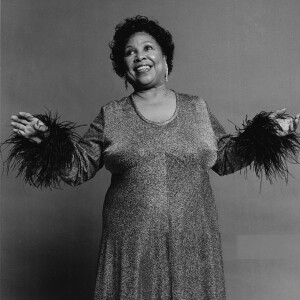
When Billie Holiday left the original Count Basie orchestra in 1938, how could she be replaced, and who could replace her? The musical answer is the incomparable Helen Humes, a major figure in her day but long overlooked. Helen was born in Louisville, Kentucky June 23, 1909 (a date sometimes made younger in press releases and reference books) to a middle class black family, her father a lawyer, just a generation removed from slavery.
As a teenager, she already made her name singing in the classic 1920's blues style and waxed popular records for OKeh. After working in banks and law offices, Helen spread her wings and sang with Al Sears in Buffalo, and on the road, where she came to the attention of Basie. For several years in the late 1930's and early 1940's, Helen was the featured female vocalist in the Basie band, sharing the microphone with blues shouter Jimmy Rushing. Helen sang with a fresh and girlish timbre that was playful and endearing, yet she also conveyed the wizened and worldly wise emotions of the blues and popular song book, that enabled her to fill Billie’s shoes. After leaving Basie, Helen established herself in the post war years in Los Angeles as a popular attraction, recording with old jazz friends such as Buck Clayton, Lester Young and Benny Carter. More notably, she became a dynamic star in the burgeoning rhythm and blues field with hits such as “E-Baba-Leba”, “Million Dollar Secret” and “They Raided The Joint”. In the late 1950's, Helen toured Australia with Red Norvo. Upon returning stateside Humes made some stunning recordings of classic standards with the Contemporary label that gave her some acclaim. However, she then retired for many years to care for her elderly parents back in Louisville.
Humes made a startling comeback when Stanley Dance presented her at the Newport Jazz Festival in 1973. Concert appearances in Europe, new record contracts, and engagements at Barney Josephson’s The Cookery in Greenwich Village gave that rarest accomplishment, a second act in American arts. Helen died in 1981.
originally broadcast July 24, 2016; re-broadcast 2022

Monday Dec 30, 2024
Monday Dec 30, 2024
WKCR has a long standing tradition of celebrating Roy Eldridge, “Little Jazz”, with a marathon 24-hour broadcast tribute every year on the trumpet giant's birthday anniversary, January 30.
Here’s my shift from the 2024 edition. Three and a half hours, comprised of individual segments highlighting Roy’s associations with Oscar Peterson, Mildred Bailey, Tiny Grimes, Billie Holiday, Artie Shaw, Gene Krupa, and the Newport Rebels.
Friday Dec 27, 2024
Friday Dec 27, 2024
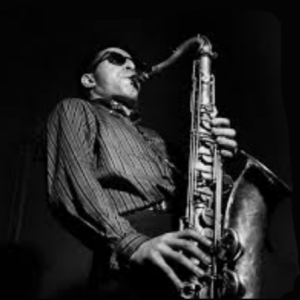
JR Monterose possessed a very strong and personal emotional tone on the tenor sax, and he is one of the underrated masters of the modern jazz era.
Frank Monterose, Jr. was born in 1927 and raised in Utica, NY. The moniker JR comes not from initials but from being a Jr. but he usually spelled it without punctuation. Monterose started his professional career briefly in the big bands of Buddy Rich and Claude Thornhill. As a young man, he also performed widely in upstate New York in various settings under his own name.
Monterose moved to New York City in 1954 where he quickly established himself in the modern jazz scene. He performed with various notable groups and appeared on some seminal recordings of the period. Among his credits are classic albums from stays with Teddy Charles and Charles Mingus, participation in Kenny Dorham’s regular working band “The Jazz Prophets”, and collaborations with Hod O’Brien and Wilbur Ware, among others.
In the 1960's, the vagabond Monterose moved on, with stops as a local legend in places like Cedar Rapids, Iowa, on the West Coast, and then many years in European outposts. Monterose returned to the United States in the late 1970's and became a fixture in Albany and elsewhere in upstate New York in venues like the Lark Tavern. He died of cancer in 1993 at the age of 66.
This program features major recordings, such as Mingus’s “Pithecanthropus Erectus” Charles’s “Relaxo Abstracto”, and Dorham’s Café Bohemia dates, as well as Monterose’s sides as a leader, ranging from Blue Note in the 1950's, to rarer later discs.
originally broadcast March 17, 2024
Wednesday Dec 18, 2024
Wednesday Dec 18, 2024
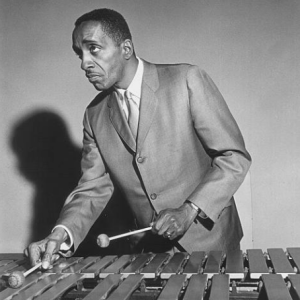
Milt Jackson was one of the all-time jazz greats on the vibraphone. First, he was an innovator bringing this esoteric instrument to the bebop revolution of Dizzy Gillespie and Charlie Parker. Additionally, he possessed superb musicality that added to the popularity of the instrument. Beyond utilizing the percussion role of the vibes, Jackson played with fleet, free flowing lines suitable to modern jazz. He was a master of a soulful, piercing, driving sound. While at slower tempos, with notes elaborated and sustained for romantic effect, he would play ballads or the blues that communicated with the listener to the core.
Milt Jackson was born in Detroit on January 1, 1923. His father was an auto worker but also a musician who played several instruments. The family was raised in the gospel church where they all played music. Young Milt exhibited proficient musical talent at an early age, and he played several instruments, including piano, guitar and drums, and also sang. He attended Miller High School which had an excellent music department [in a de facto segregated African American school in Depression era America], and he played these, and other instruments, in their bands. When he was still a teenager, his father bought him a set of vibes. Jackson served in the Armed Forces during World War II, then upon discharge to civilian life in 1944 he began a career as a professional musician in earnest, focusing on the vibes.
Jackson drew the attention of Dizzy Gillespie and moved to New York in the fall of 1945 to join the trumpeter’s band. Significantly he joined Dizzy and Charlie Parker on their seminal tour of the West Coast in December 1945.
Nicknamed “Bags”, Jackson was ubiquitous during the founding years of bebop, playing not only with Diz, frequently, and Bird, but also most of the other young turks. Bags also had a notable and sympathetic association with Thelonious Monk and appears on many of his early recordings.
By the early 1950's Jackson was a star. He served in many small combos, performed frequently, and recorded numerous memorable and swinging recordings as a leader. Additionally, in small groups he teamed up with pianist John Lewis and bassist Percy Heath and drummers first Kenny Clarke, and then Connie Kay, to produce a refined chamber jazz sound in a quartet setting. This eventually became a formal group, the “Modern Jazz Quartet” (MJQ), which transcended musical barriers. With their touch of elegance, the MJQ became an international attraction which toured and performed regularly into the 1970's.
Thereafter, Bags renewed pursuit of an individual career, made notable records for CTI and Pablo Records, led his own touring groups often backed by the band of Mike LeDonne, Bob Cranshaw, and Mickey Roker, and reunion appearances with the MJQ.
Jackson died of cancer in October 1999 at the age of 76.
originally broadcast January 15, 2023
Wednesday Dec 11, 2024
Wednesday Dec 11, 2024
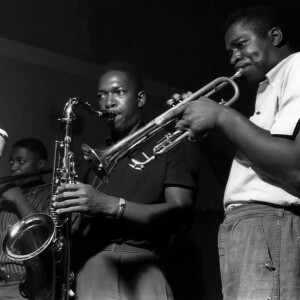
WKCR presented a marathon special broadcast saluting Donald Byrd, in December 2024.
For my contribution, I prepared a set surveying Donald Byrd’s intersections with John Coltrane.
In the period 1956-1958, only shortly before each in their own way were to burst forth separately to a next level of stardom, Byrd and Coltrane appeared together (though not "in tandem") on several recording sessions. They made dates with Elmo Hope, Paul Chambers, Sonny Clark (the classic LP “Sonny’s Crib”), Art Blakey, and Prestige blowing encounters with Red Garland. All nice listening with wonderful extended solos and prime collaboration.
originally broadcast on December 10, 2024
Wednesday Dec 11, 2024
Wednesday Dec 11, 2024
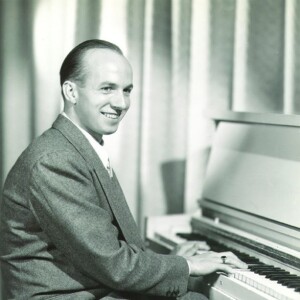
Some of the best in jazz derives from its interpretations of the great American popular songbook, and Jimmy Van Heusen was one of its composer-giants. In 2013, the centennial of Van Heusen’s birth, we added this jazz flavored element to its commemoration.
Van Heusen was born in Syracuse, NY on January 26, 1913 as Edward Chester Babcock. He began a musical career in high school and worked as a radio disk jockey, taking the stage name Van Heusen from the shirt company. He moved to New York City in the thirties to start as a professional songwriter, his first major association coming at the Cotton Club, arranged by his friend Harold Arlen. His first big number was “Darn That Dream”, written for Benny Goodman, soon followed by the likes of “All This And Heaven Too”, “Shake Down The Stars” and many other hits.
By 1940, Van Heusen teamed with lyricist Johnny Burke and wrote for over 30 films for Paramount Pictures, and also for the Broadway stage. The Burke-Van Heusen partnership lasted well in to the 1950's and produced classics such as “Polka Dots And Moonbeams”, “Imagination”, “But Beautiful”, “It Could Happen To You”, “Here’s That Rainy Day”, and “Like Someone In Love”.
After Burke semi-retired, Van Heusen joined forces with Sammy Cahn and continued to write for the movies, with chestnuts like “All The Way”, “The Second Time Around”, “Come Fly With Me”, “Call Me Irresponsible”, and too many more to mention. He became an intimate of Frank Sinatra and was involved in much of Sinatra’s success in this period. Van Heusen died in 1990 at the age of 77.
This radio program presents jazz versions of Van Heusen’s songs featuring many instrumental improvisations, and also vocal versions from greats such as Billie Holiday, Dinah Washington and Etta Jones.
originally broadcast February 24, 2013
Wednesday Dec 04, 2024
Wednesday Dec 04, 2024
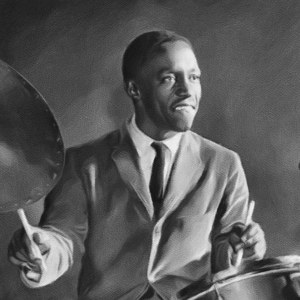
Sid Gribetz features Art Blakey’s Jazz Messengers “From Moanin’ To Kyoto”.
Art Blakey is the dynamic drummer and band leader who nurtured many young jazz stars and inculcated the “hard bop” sound in the groups he organized over the many decades of his career until his death in 1990.
Even in a five hour program, we will have time to focus only on a limited aspect of Blakey’s prolific career. Thus, we’ve chosen to explore a period of golden flowering of the ensemble, starting with the arrival in 1958 of Benny Golson. Golson organized matters and brought fellow Philadelphians Lee Morgan, Bobby Timmons and Jymie Merritt into the fold; instilled their repertoire with his sophisticated compositions (and Timmons’s, too); and thereby took the Messengers to the “next level”.
In the fall of 1958, the group recorded its seminal Blue Note album “Moanin’” and then embarked on an extended European tour which put it on a broader map.
Golson would soon leave, eventually to be replaced in the tenor saxophone chair by Wayne Shorter. Shorter and Morgan, with their crackling and crisp virtuosity as soloists, and lyrical song writing and ensemble playing, set another high bar for the Jazz Messengers style.
Morgan would depart in 1961 to be replaced by Freddie Hubbard; trombonist Curtis Fuller would be added to make the group a sextet; and Cedar Walton would come on board to take the piano bench. All would contribute their original compositions to the band’s “book”, songs that are now part of the established modern jazz repertory. Additionally, the Jazz Messenger sound turned on their innovative arrangements and creative solos that infused popular standards with fresh, new meaning.
Blakey toured Japan to an ecstatic response in January 1961, and returned frequently thereafter. From these trips, he assimilated a Japanese flavor into songs such as Ugetsu, On The Ginza, and Kyoto adding to the scope of the presentation.
Thus, I’m entitling the show “From Moanin’ to Kyoto”, as the program will feature classic recordings of Blakey’s Jazz Messengers in this fertile period – late 1958 through 1964 (when “Kyoto”, the last of their Riverside albums, was made).
originally broadcast February 18, 2018
Sunday Nov 17, 2024
Sunday Nov 17, 2024
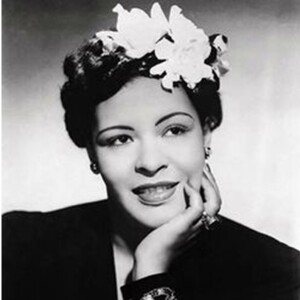
During the 2019 Billie Holiday WKCR Birthday Broadcast, I put together a segment of an erstaz sampling of live performances, some famous, some obscure, including, among others, Count Basie, Stan Getz, A Yiddishe Momma, and The Sound Of Jazz TV broadcast. A nice listen....
88 minutes