Listen on:


Episodes
Friday Jul 26, 2024
Friday Jul 26, 2024
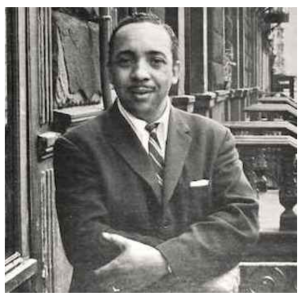
With his block-chord style, and bright and breezy attitude, Red Garland’s piano was swinging and sensitive at the same time. Whether serving as an accompanist in classic jazz combos, or out front as the leader of a romantic piano trio, Garland left a lasting impact in modern jazz.
WKCR presented a marathon radio tribute to Garland on May 13, 2013 to honor the centennial of his birth.
Here's my three hour segment, which focused on Garland with horns, such as John Coltrane, Arnett Cobb, Coleman Hawkins, Eddie Lockjaw Davis and many more. (But omitting his work with the classic Miles Davis groups)
Friday Jul 26, 2024
Friday Jul 26, 2024
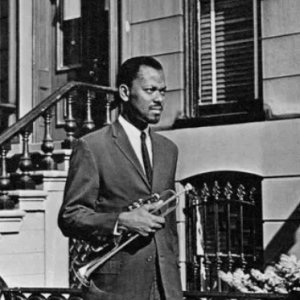
Trumpeter Richard Williams was active on the New York scene mainly in the 1960's and 70's. A first rate musician, he had the nickname “Notes”. In addition to jazz combos Williams worked steadily in Broadway show pits, classical music ensembles, many big bands, and modernist large ensembles. As such, he participated in many significant musical endeavors over time, but not in the forefront or the limelight.Richard Williams was born on May 4, 1931 in Galveston, Texas. After college, Williams entered the service and spent many years in an Air Force unit that intensified his musical studies. Stationed for a time in San Francisco, he stayed in California and performed in Bay Area clubs. Williams moved to New York City in the late 1950's and resided here the rest of his life. He did graduate studies at the Manhattan School of Music, obtaining a Master’s Degree.Williams made his first jazz records with Charles Mingus in 1959 (“Mingus Dynasty”). For several years he participated in the Mingus workshop groups and with Mingus-mate John Handy, and he appears on some of their classic recordings. Another significant association was as a key member in the working group of Gigi Gryce in the early 1960's. He was also a vital participant in Slide Hampton’s medium-size ensembles, including their notable 1962 European tour and Atlantic records. Other important early credits include colleagues as diverse as Rahsaan Roland Kirk, Leo Wright, Yusef Lateef and Booker Ervin.Surprisingly, Williams made only one record as a leader under his own name – “New Horn In Town” – for Candid Records in 1960. It’s a beauty.Richard Williams was an important musician around town for many dates. A relevant example is his association with the Thad Jones-Mel Lewis (Vanguard) Orchestra in the beginning years of that significant band. In that vein he would also be on call for work as diverse as Tolliver’s Music Inc. to the studio big bands that backed some of Aretha Franklin’s music.Still working in the 1980's, Williams appeared with the Mingus alumni ensembles and the Illinois Jacquet big band.
Richard Williams died of kidney disease in 1985 at the age of 54.While you may not know his name, you can see that we’ll have plenty of interesting records to play during this three hour long retrospective tribute.
originally broadcast December 15, 2019
Monday Jul 08, 2024
Monday Jul 08, 2024
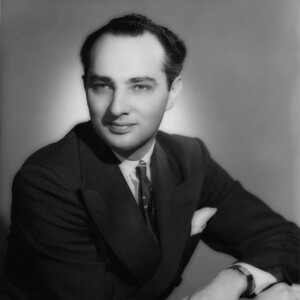
This is one of a series of Profiles we’ve done over the years focusing on the jazz impact of a legendary composer from the Great American Songbook.Our enduring “standards” are part of the sinew of jazz performance, as their musical forms, melodies, and harmonic structure provide a sturdy and meaningful basis for jazz improvisation and expression. These songs have become lasting touchstones in our jazz repertory.Arthur Schwartz was born in 1900 in Brooklyn. His father was an attorney who encouraged him to enter the law. After studies at Boys High, and in Literature and Law at Columbia and New York Universities, he worked as an English teacher and then was admitted to the bar and practiced law in New York City. However, Schwartz was always interested in music and songwriting, which he did as a hobby. He was a friend of Lorenz Hart, who encouraged him. By 1929, Schwartz eschewed the law business and gave up his practice, turning to music full time.Schwartz teamed up with lyricist Howard Dietz and this initial endeavor proved successful, as they composed pieces for Broadway revues and eventually full “book musicals” throughout the 1930's. Leaving his partnership with Dietz, Schwartz worked with other notable lyricists and composed songs for movie scores as well as Broadway shows. Among his famous compositions are “I Guess I’ll Have To Change My Plan”, “That’s Entertainment, “Alone Together”, “Dancing In The Dark”, “You and The Night And The Music”, “By Myself”, “Rhode Island Is Famous For You”, and many more nuggets. His songs often featured a wistful and melancholic sensitivity, but they also were informed by a melodious sophistication and joyous lyricism.As an interesting footnote, Arthur Schwartz is the father of radio personality and music historian Jonathan Schwartz.Our program will discuss Schwartz’s career, and then take a “deep dive” into the jazz versions of these songs. We’ll play recordings by Miles Davis, Charlie Parker, Lester Young, John Coltrane, and less famous jazz masters, too, that will give you great insight into Schwartz’s music.
originally broadcast August 21, 2022
Monday Jul 08, 2024
Monday Jul 08, 2024
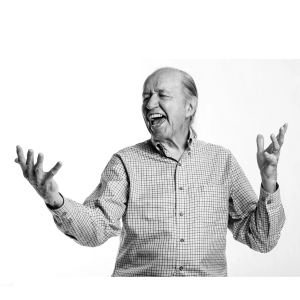
Bob Dorough encompasses a wide arc of American music. He is rooted in the Americana of a Hoagy Carmichael or Johnny Mercer, energized under the counter-cultural fervor and swell of the bebop jazz revolution, a witty and literate songwriter of sophisticated pieces, a cultural icon of children’s songs, and a vivid interpreter of the American popular songbook with a unique personal vision. We will explore all aspects of his career during the program. Bob Dorough was born in Arkansas on December 12, 1923 and raised in rural areas across Arkansas and Texas. He received formal musical education in Plainview Texas High School; drafted into the Army during World War II, he served with a special services musical unit, and after the war studied in the renowned music program at North Texas State University. Upon graduating in 1949, Bob moved to New York City and a cold water East Side flat to immerse himself in the modern jazz scene. At one point he was hired by boxer Sugar Ray Robinson to play music for his rhythm in training, and Robinson then enlisted Bob for his dance review, which brought him to Paris. While in Paris, Bob teamed with Blossom Dearie and the Blue Stars of France vocalists. Back in the States, Bob recorded his first album for Bethlehem in 1956, “Devil May Care”, which has become a vocalese classic. The itinerant hipster, Bob was in California in the late ‘50's, with beatniks and Lenny Bruce and great California cool musicians; next with Fran Landesman and Tommy Wolf in St. Louis; back in New York solicited by Miles Davis to write and record vocals, including the sardonic “Blue Xmas”; teaming along the way with the Dave Frishberg’s, the Dearie’s, Landesman’s et al to develop a style of hip songwriting exemplified at its best by the song “I’m Hip”. By the late 60's Bob played with hippie bands such as “Spanky and Our Gang” and developed a “pop art” style in the manner of “Love: Webster’s Definition”. Another chapter in Bob’s career unfolded when he was hired in the early 1970's to write the songs for a new ABC children’s TV special “Schoolhouse Rock”. That then-youthful generation now knows what’s the function of “Conjunction Junction” and lionizes Dorough. Having settled in the musicians' haven of the Delaware Water Gap/Pocono region of Northeastern Pennsylvania, from that base for many decades Dorough toured the world spreading his musical vision with elan and joy, a sparkling pianist and vocalist purveying the richness of jazz and popular music with a sense of verve and swing, and singing his own compositions and the gems of the American Popular Songbook invested with both a homespun twang and an urbane understanding.Bob died peacefully in his PA home on April 23, 2018 at the age of 94, active until the end. Shortly before his death, Dorough was selected to be a National Endowment for the Arts Jazz Master, an award which was formally bestowed posthumously in 2019.
originally broadcast December 17, 2023
Monday Jul 08, 2024
Monday Jul 08, 2024
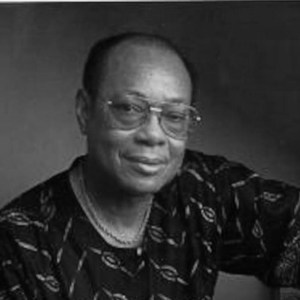
Richard Wyands was one of the great heroes of modern jazz piano. An unassuming man who did not seek much publicity, he was a vital force in our jazz community. Wyands was a sparkling pianist of elegance and grace, with great swing and command. He contributed his talents to many jazz groups throughout the years.Richard Wyands was born in Oakland, California on July 2, 1928. He exhibited prodigy-like talent as a child and took [mainly] classical music lessons. When as an 11-year old he saw Count Basie perform at the World’s Fair on Treasure Island, he was hooked on jazz, and as a teenager he and his friends were influenced also by Duke Ellington’s appearances in San Francisco. At age 16 he formed a group that Jo Jones arranged to perform in Officer’s Clubs for servicemen in the Pacific theater. After graduating college at San Francisco State, he became a notable jazz figure in the Bay Area in the 1950's and for many years was the house pianist at the leading San Francisco nightclub, the Blackhawk.After lengthy tours of North America, first as Ella Fitzgerald’s accompanist, and then backing Carmen McRae, eventually Wyands moved to New York City in 1959. He established significant credentials associating with Charles Mingus, and in Gigi Gryce’s working groups. By the early 1960's, he served in effect as the standing recording pianist for Prestige Records, appearing on seminal albums with the likes of Roy Haynes (“Just Us”), Eric Dolphy, Oliver Nelson (“Straight Ahead”), and Etta Jones (“Don’t Go To Strangers”).In the late 1960's and 1970's Wyands had a long and fruitful association with guitarist Kenny Burrell. Wyands also worked frequently at the West End Café in the jazz revival of the late 1970's, and, with George Kelly, played in the movie “Moscow On The Hudson”.For many decades thereafter, Wyands was a leading figure on the New York scene in nightclubs and concerts. He appeared on many stellar records with Harold Ashby, Houston Person, Jimmy Cobb, and Etta Jones’s later oeuvre, to name a few. More significantly, he eventually was able to record a good number of piano trio records as a leader.Richard Wyands died of natural causes on September 25, 2019 at the age of 91.
originally broadcast March 20, 2022
Monday Jul 08, 2024
Monday Jul 08, 2024
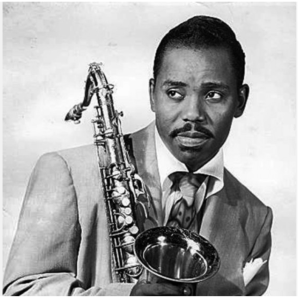
Willis Jackson was among the notable cadre of exciting, young, Florida musicians who came of age in the post World War II bebop years. He got his first major professional break in the Cootie Williams orchestra, with whom he scored his first big record "Gator Tail" in 1949. Jackson then plied his trade in the rhythm and blues field and married the great singer Ruth Brown, and his sax strongly backs Brown on her early recordings such as "5-10-15 Hours".
After breaking up with Brown, Jackson made his name for many years in the organ-tenor sax groups with the likes of Jack McDuff, Thereafter, in the classic jazz revival of the 1970's he played strong mainstream jazz in many venues. He suffered from poor health and died in 1987 at an early age.
originally broadcast in 2012
Monday Jul 08, 2024
Monday Jul 08, 2024
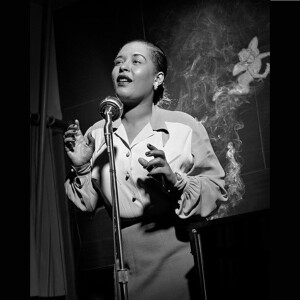
From the 2024 edition of WKCR's annual Billie Holiday special, my shift contains a variety of material, including a segment comparing Billie Holiday's classic small group recordings of the 1930's revisited in Norman Granz productions of the 1950's with Ben Webster, Sweets Edison and others.
Friday Jul 05, 2024
Friday Jul 05, 2024
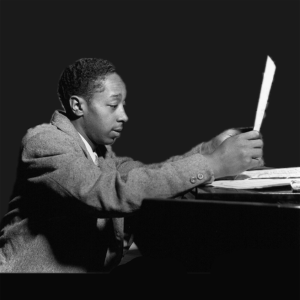
Born in 1923 and coming of age in the bebop and hard bop years, as a youth Elmo Hope was friendly with Bud Powell and Thelonious Monk. Hope was a creative pianist and inventive composer. He possessed the fleet linear attributes and innovations of bebop. However, more significant was his compositional outlook, angular and dissonant in the mode of Herbie Nichols or his close friend Monk, yet with a romanticism that tempered the sometimes harshness of that style and stamped his true individualism. He lived on Lyman Place in the Bronx and nourished the African-American musical community of the borough. Hope was denied widespread opportunities during his playing days, died young in 1967, and is often overlooked in the jazz history canon.The program will explore his many compositions, as performed in piano-led dates, and we will also highlight notable appearances on classic recordings with the likes of Clifford Brown, Lou Donaldson, Sonny Rollins, Harold Land, Frank Foster, and John Coltrane.
originally broadcast July 23, 2023
Thursday Jul 04, 2024
Thursday Jul 04, 2024
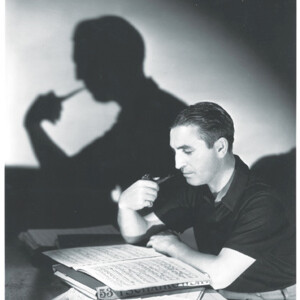
The popular standards of the Great American Songbook provide the foundational material for the musical improvisations of the jazz repertory. This program is one of an occasional series we’ve produced focusing on the legendary composers and their jazz interpretations. Born in New York to Italian immigrant parents in 1893 as Salvatore Guaragna, Harry Warren was a self-taught musician who dropped out of high school to begin performing in the entertainment field. After stateside service in the Navy during World War I, Warren worked for Vitagraph Films in Brooklyn, and then as a song plugger for publishers and a composer for the stage in Manhattan in the 1920's. With the advent of sound pictures, Warren was among the first songwriters to take up residence in Hollywood and compose for the film studios and their classic musicals. Beginning with “42nd Street”, Warren provided the music for the Warner Brothers Busby Berkeley productions of the 1930's, and then movie projects of 20th Century Fox, MGM and other studios in the 40's and 50's. Among his famous, enduring, compositions are There Will Never Be Another You, The More I See You, You’re Getting To Be A Habit With Me, Serenade In Blue, I Only Have Eyes For You, At Last, Jeepers Creepers, Lullaby Of Broadway, September In The Rain, Chattanooga Choo Choo and many more. The program will put these songs in perspective and play jazz versions with swinging improvisations by instrumentalists ranging from Lester Young and Sonny Rollins to Miles Davis and Eddie Lockjaw Davis, among others, as well as vocalists such as Louis Armstrong, Billie Holiday, Johnny Hartman, Etta Jones and Etta James. And maybe we’ll throw in The Flamingos, too.
originally broadcast in 2017
Thursday Jul 04, 2024
Thursday Jul 04, 2024
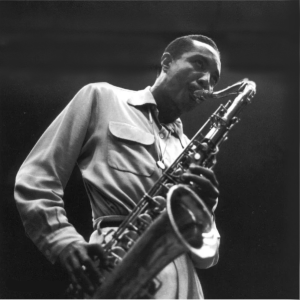
Land was best known as the tenor saxophonist in the original Clifford Brown-Max Roach Quintet. But his prolific and accomplished career lasted more than four decades thereafter, although never gaining the more widespread fame that he deserved. Land possessed a firm sound and ingenious creativity on his saxophone and also was an inventive composer.Harold Land was born in Houston, Texas in 1928, and his family moved eventually to San Diego, where he was raised. As a young man, Land settled in Los Angeles, and he remained a Californian for the rest of his life.When Max Roach was forming what would be his famous group with Clifford Brown, they auditioned several for the saxophone chair, before becoming enamored hearing Harold Land in a jam session at Eric Dolphy’s home. Land was a key member of the group during its first two years, 1954 and 1955. With the demanding national touring, missing his home and his family, and needing to care for an ailing relative, Land left the group and returned to LA. (He was replaced by Sonny Rollins, which unfairly overshadowed the critical acclaim and recognition that Land’s historic contributions to the group should have commanded).Once he got settled again, Land became an important figure in the Los Angeles music scene. In the late 1950'’s he recorded his own albums for Contemporary and other labels, guested with Wes Montgomery and Monk, had a working group with Curtis Counce and also Hampton Hawes and Elmo Hope as associates.Ongoing in his career he worked frequently in Gerald Wilson’s bands and recordings and other West Coast activities, such as with Carmell Jones. In the late 1960's Land had a provocative working collaboration with vibraphonist Bobby Hutcherson. Later he co-led a group with Blue Mitchell, and also played with the “Timeless All Stars” including Hutcherson and other confreres like Curtis Fuller, Cedar Walton, Buster Williams and Billy Higgins. Land taught in the fine jazz program at UCLA. He died of a stroke in 2001 at the age of 72.
originally broadcast on June 23, 2024